Inside the Mind of a Buyer: What Really Drives Decisions

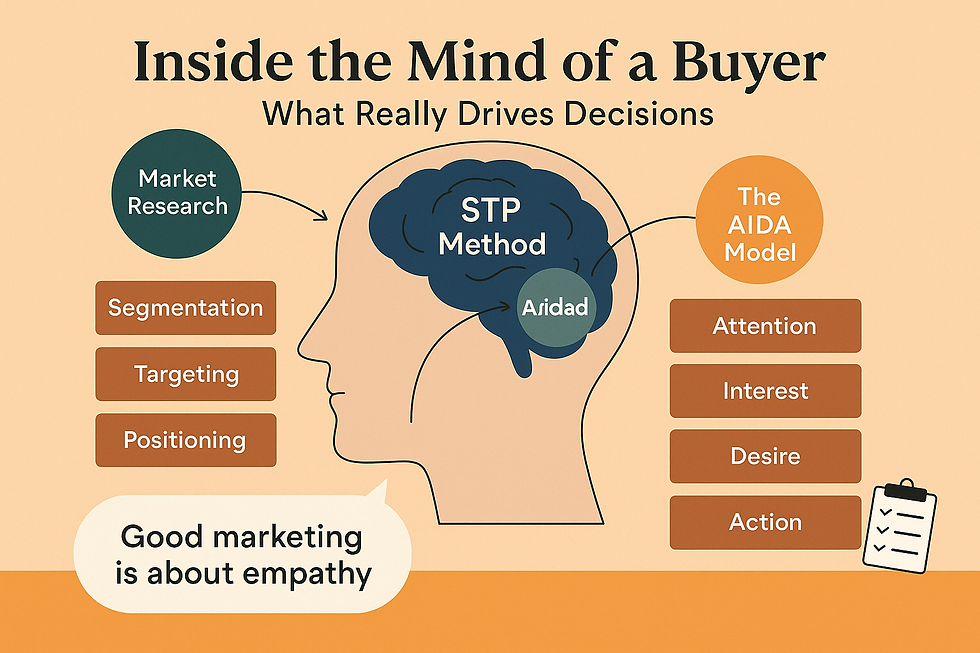
When we look at why people buy things, it’s easy to think it comes down to the price or the brand, but now we know that consumer decisions are much more complex. They are shaped by psychology, strategy, and research.
Market research should always be the first step. Numbers are useful, but they only give part of the picture. Statistics can show what people are doing and when, while conversations and feedback tells the reasons behind those choices. When both are put together, businesses get a clearer picture of their audience, which is especially helpful when trying to connect with specific groups.
After collecting data, companies move into what’s called the STP Method, which stands for segmentation, targeting, and positioning. In simple words, this means sorting people into groups, picking the groups they want to focus on, and then deciding how they want their brand to be perceived by each of those groups. It’s basically about making sure the product feels like it truly belongs in the customer’s life.
The STP Method:
Segmentation: Breaks the market into groups of people with similar traits like age, lifestyle, location, or habits.
Targeting: Chooses the groups that make the most sense to focus on based on size, potential, and resources.
Positioning: Decides how you want your product or brand to be seen by that group (could be quality, price, lifestyle fit, or something specific)
The psychology of buyers is just as important. Shoppers go through steps like realizing a need, searching for information about a product, comparing options, making a purchase, and reflecting on how they feel after. It starts with attention, then builds interest, sparks desire and ends with an action.
The AIDA Model:
Attention: Grabs people’s awareness with something eye-catching
Interest: Keeps them curious by showing how the product can improve their life
Desire: Creates an emotional reaction that makes them actually want the product
Action: Guides them to the next step (clicking, signing up, or buying)
The main insight to take away is that good marketing is not about tricking people, it’s about empathy. When research, marketing strategies like STP or AIDA, and psychology work together, businesses can create a brand message that connects in impactful ways.
In a world where customers can move on to the next option with one swipe, real connections are what makes a brand stand out.


Comments